
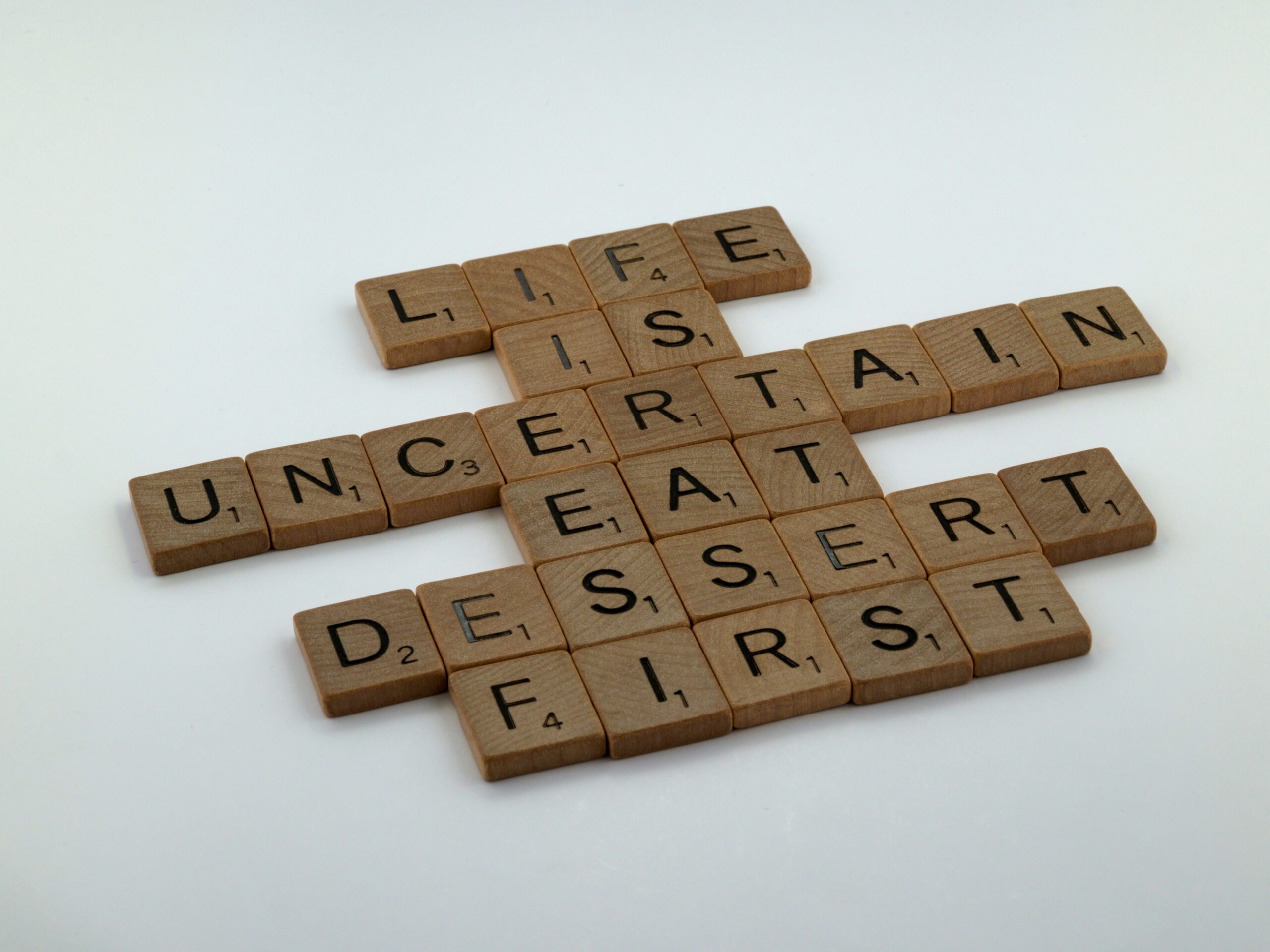

Something has changed in the quality of the anxiety people are carrying right now.
It is not the ordinary stress of a busy season or a difficult quarter. It is something closer to a persistent hum of unease that does not fully switch off. People are lying awake not because of a specific problem they need to solve, but because the world itself feels less predictable than it did before. Economic instability, geopolitical tension, rapid technological change, and a news cycle that seems to escalate daily have created a kind of collective nervous system overwhelm that most people are managing largely alone and largely in silence.
I see it in the leaders I work with. I see it in the high performers who are still showing up and delivering, but feel stretched in a way they cannot quite name. And I see it in the personal conversations that find their way into coaching sessions, the ones that begin with a work question and then reveal something much more human underneath.
How to deal with uncertainty and anxiety is one of the most common threads running through my coaching conversations right now — and the answers most people reach for are making things harder, not easier. The fear is real. The uncertainty is real. And the way most people are responding to both is making things harder, not easier.
What Fear Does to a Thinking Person
When we feel threatened, and prolonged uncertainty registers in the body as threat, our nervous system responds the same way it has for thousands of years. It narrows our focus, accelerates our thinking, and prepares us to act. This is useful when the danger is immediate and specific. It is significantly less useful when the source of the threat is global, ongoing, and largely outside our control.

What I’ve seen in my work is that intelligent, capable people often respond to uncertainty by doing more of what made them successful when life felt more predictable. They research more, plan more, analyze more, and try to think their way to solid ground. Instead of asking how to deal with uncertainty and anxiety from a grounded place, the mind works harder trying to resolve something that cannot be resolved through thinking alone.
“You can’t calm the storm. What you can do is calm yourself. The storm will pass.” — Timber Hawkeye
That is not a passive idea. It is a practical one. Because the nervous system that is flooded with cortisol and running on worst-case scenarios is not the nervous system that makes good decisions, builds strong relationships, or leads with any kind of clarity. Settling yourself first is not avoidance. It is the prerequisite for everything else.
The Difference Between Uncertainty and Instability

Here is a distinction I come back to often in this work, both personally and with clients.
Uncertainty is about what is happening out there. Instability is about what is happening in here. The first is largely outside your control. The second is not.
Most people conflate the two. When the external world feels unpredictable, they conclude that they themselves are on unstable ground. And from that place, everything feels harder. Decisions feel riskier. Relationships feel more fragile. The future feels genuinely threatening rather than simply unknown.
“Between stimulus and response there is a space. In that space is our power to choose our response. In our response lies our growth and our freedom.” — Viktor Frankl
What Frankl understood from circumstances far more extreme than most of us will ever face is that the inner world is always accessible, even when the outer world is not. And tending to the inner world is not a luxury reserved for calmer times. It is most necessary precisely when things feel most out of control.
The leaders and people who move through uncertainty with the most grace are not the ones who have better information or clearer answers. They are the ones who have built a relationship with their own inner steadiness and can return to it when the ground outside keeps shifting.
What Actually Helps

This is where I want to be specific, because the remedy for this kind of fear is not inspirational. It is practical, physical, and built into ordinary moments.
Regulate before you respond. Knowing how to deal with uncertainty and anxiety is less about managing your thoughts and more about regulating your body first — and that starts with something as simple as your breath. When anxiety spikes, the body needs a signal that it is safe before the mind can think clearly. The most direct way to send that signal is through the breath. A simple practice: breathe in slowly for five counts, and out for seven. The extended exhale activates the parasympathetic nervous system and begins to lower the physiological state of alarm. Do this for two minutes before a difficult conversation, a stressful decision, or the moment you reach for your phone first thing in the morning. It is not dramatic. It works.
Separate what is yours from what is not. Spend five minutes at the end of each day writing down what you are carrying. Then sort it into two columns: what is within my influence, and what is not. This is not about bypassing reality. It is about reclaiming your attention. Most anxiety lives in the second column, in the things we are turning over repeatedly that we cannot actually affect. Naming them and consciously setting them aside, even temporarily, frees up real energy.
Anchor to what is true right now. Fear lives in projection. It pulls you out of the present and into a future that has not happened yet. One of the most effective things I know is also one of the simplest: several times a day, pause and name three things that are true and stable right now, in this moment. Not in six months. Right now. This is not toxic positivity. It is a neurological interrupt. It brings your nervous system back to the present, where it is actually equipped to function.
Tend to your inner life deliberately. This means different things for different people. For some, it is meditation. For others, it is movement, time in nature, journaling, or prayer. What matters is that it is consistent and that it is protected. In uncertain times, the first things people tend to drop are the practices that most sustain them. That instinct is worth reversing. The more destabilized the outer world feels, the more important the inner practice becomes.
Choose your inputs consciously. The nervous system cannot distinguish between a threat happening to you and a threat you are reading about. Constant exposure to distressing news keeps the body in a low-grade state of alert even when you are nowhere near the source. This is not about being uninformed. It is about being intentional. Set a time to check the news. Set a time to stop. Your body will thank you, and so will the quality of your thinking.
Steadiness Is Not the Absence of Fear

I want to be clear about something before I close.
Learning how to deal with uncertainty and anxiety is ultimately about building enough inner steadiness that you can feel everything fully and still choose where to place your attention. The goal here is not to feel nothing. It is not to be unaffected by what is happening in the world or to perform a kind of forced calm that has no roots. Real steadiness lives alongside real feeling. It does not replace it.
What I’ve seen, again and again, is that the people who navigate hard seasons with the most integrity are not the ones who pretended everything was fine. They are the ones who felt the fear fully and chose, from inside it, where to put their attention and their energy.
That is a choice available to all of us. Not once, but repeatedly. Some days it will feel easier than others. On the harder days, it simply requires returning, again, to the practices that bring you back to yourself.
The ground outside may keep shifting for a while. That does not mean you have to shift with it. You get to decide, with intention and with practice, where you stand.






Lovely morning read thank you Ipek. I will try some of the ideas